Most people struggle to make a sofa look “finished.” They’ll buy a beautiful new pillow or a cozy throw blanket, set it in place, and still feel like something’s missing — like the room is decorated but not designed.
Here’s the secret: it isn’t about spending more money on bigger furniture or fancier pieces. It’s about layering textiles the way designers do — with intention, structure, and a clear sense of how patterns, colors, and shapes work together. Once you understand the formula, you can recreate that polished, editorial look in your own home with just a handful of pieces.
Let’s break it down, step by step.
Start with a Hero Pattern
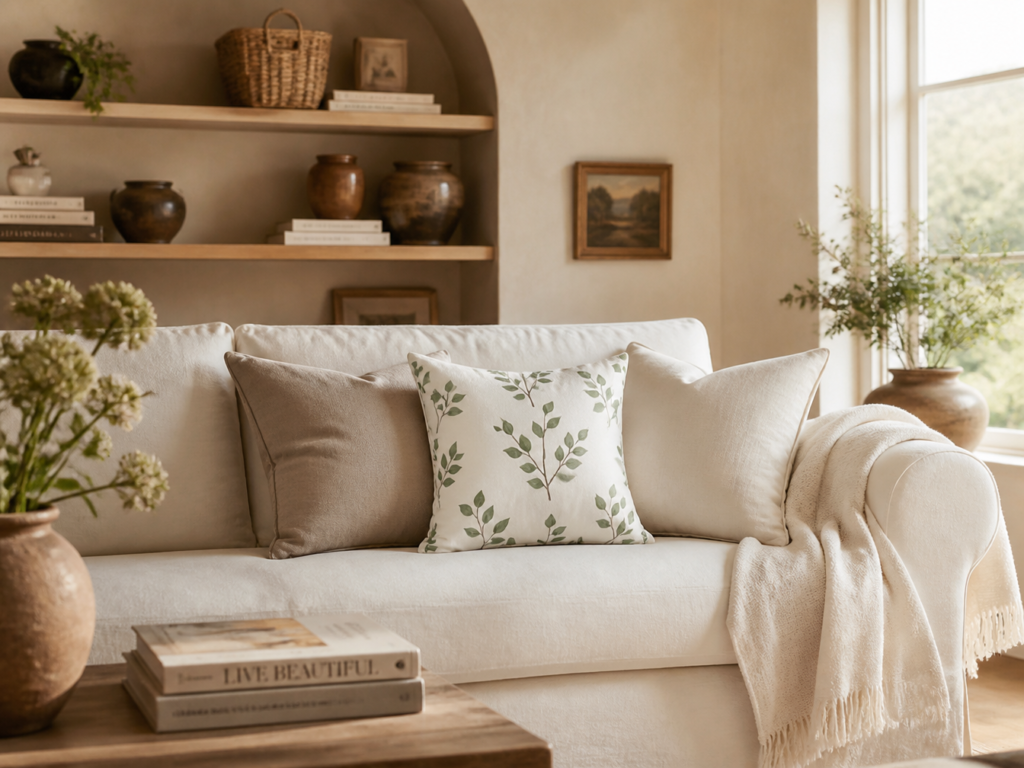
Every well-designed room starts with one statement piece — a “hero pattern” that sets the tone for everything else. This is the fabric with the most personality: the boldest print, the richest detail, the piece your eye goes to first.
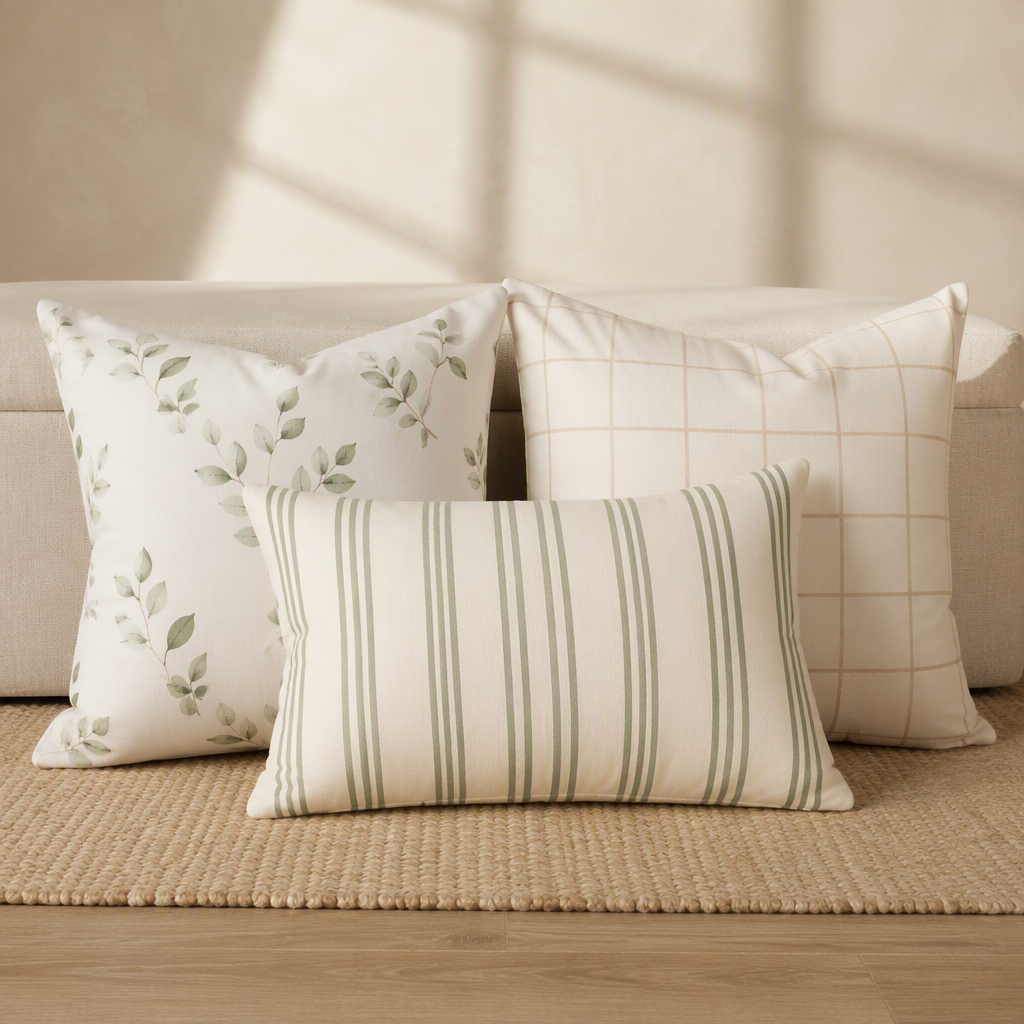
The key rule with a hero pattern: choose one. Let it be the star. Everything else you add should support it, not compete with it. In this collection, that means starting with the Willow Garden botanical pillow as your foundation piece — the one you build the rest of your layered look around.
Add a Coordinating Pattern
Once you’ve chosen your hero pattern, the next step is giving the room some structure. A single busy pattern, no matter how beautiful, can start to feel flat or overwhelming without something to balance it. That’s where a coordinating pattern comes in.
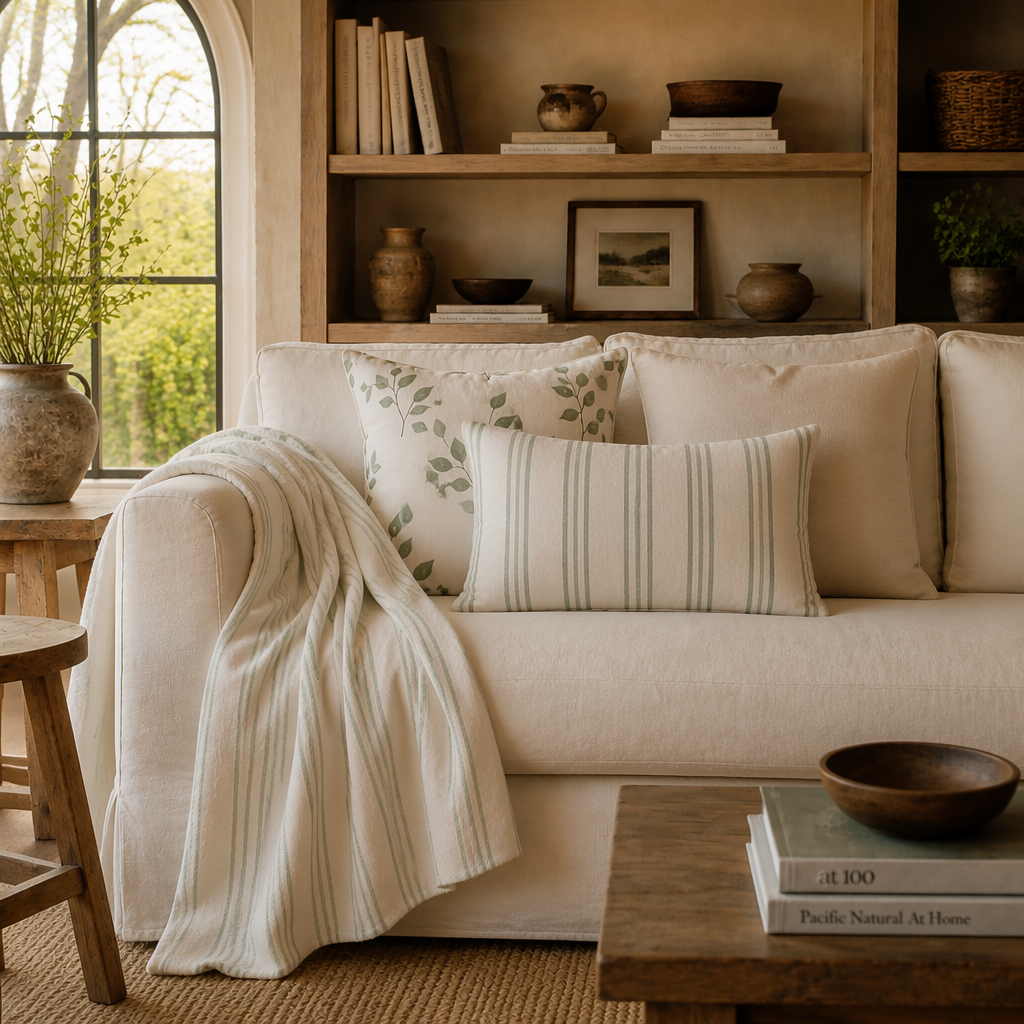
This is where Heritage Stripe comes in. Stripes are one of the most reliable coordinating patterns in a designer’s toolkit because they bring order to a room. Where a floral or botanical print is organic and flowing, a stripe is clean and linear — and that contrast is exactly what makes the combination feel intentional rather than accidental.
Pairing Heritage Stripe with Willow Garden softens the boldness of the floral while giving the eye a clear, structured line to follow. This is the layering trick most people miss: it’s not about matching patterns, it’s about balancing them.
Add a Quiet Neutral
Here’s where a lot of DIY decorating goes wrong — people stop at two patterns and call it done. But professional designers almost always include a third, quieter pattern to give the eye a place to rest.
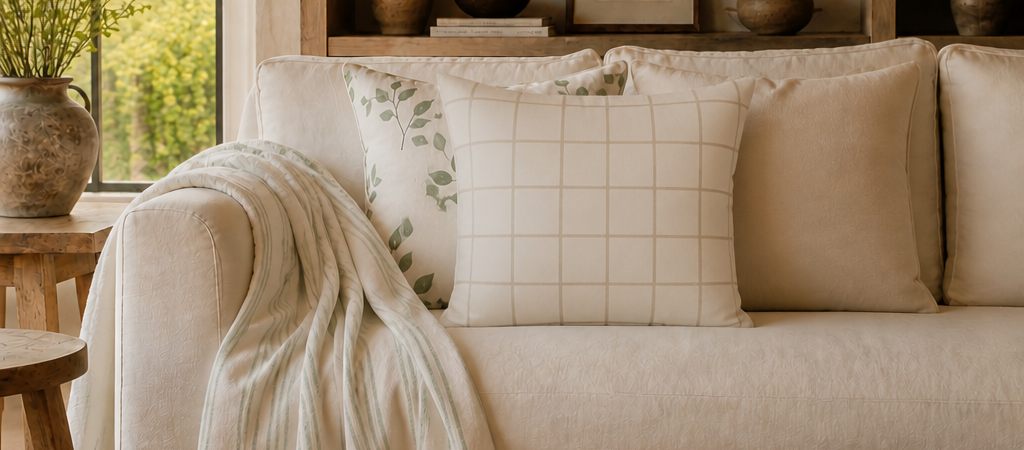
That’s the role Windowpane plays. Its soft tan grid is subtle enough that it almost reads as a neutral, but it still has just enough texture and structure to feel curated rather than plain. Think of it as the pause between two louder patterns — the visual breathing room that keeps a floral-plus-stripe combination from feeling too busy.
A good rule of thumb: if your hero pattern is the loudest voice in the room and your coordinating pattern is the supporting structure, your quiet neutral is the calm, steady presence that ties it all together.
Repeat Colors, Not Patterns
This is the single biggest trick that separates a professionally styled room from a mismatched one: repeat colors, not patterns.
Instead of using the same print in multiple places, designers pull a consistent color palette through different patterns. In this collection, that palette is:
- Sage
- Ivory
- Flax
- Warm oak
Every piece in the collection — whether it’s botanical, striped, or windowpane — pulls from this same four-color story. That’s why Willow Garden, Heritage Stripe, and Windowpane can all sit next to each other on the same sofa without clashing. Your eye recognizes the consistent color palette even as the patterns themselves change, and that consistency is what makes a mixed-pattern look feel cohesive instead of chaotic.
Layer Different Shapes
Pattern and color aren’t the only tools in a designer’s kit — shape and scale matter just as much. A sofa styled with three identical square pillows in a straight row will always look flatter than one styled with a mix of sizes and forms.
Square pillows (18×18) for a classic, grounded base
Lumbar pillows (20×14) for a longer, low-profile accent
A throw blanket for texture, drape, and movement
Mixing shapes creates visual rhythm. The eye naturally moves across a variety of heights and forms in a way it doesn’t with uniform pieces. A general layering formula to try: two square pillows in back, one lumbar pillow layered in front, and a throw blanket draped asymmetrically over the arm or back of the sofa. That combination alone instantly reads as “designed.”
Complete the Room
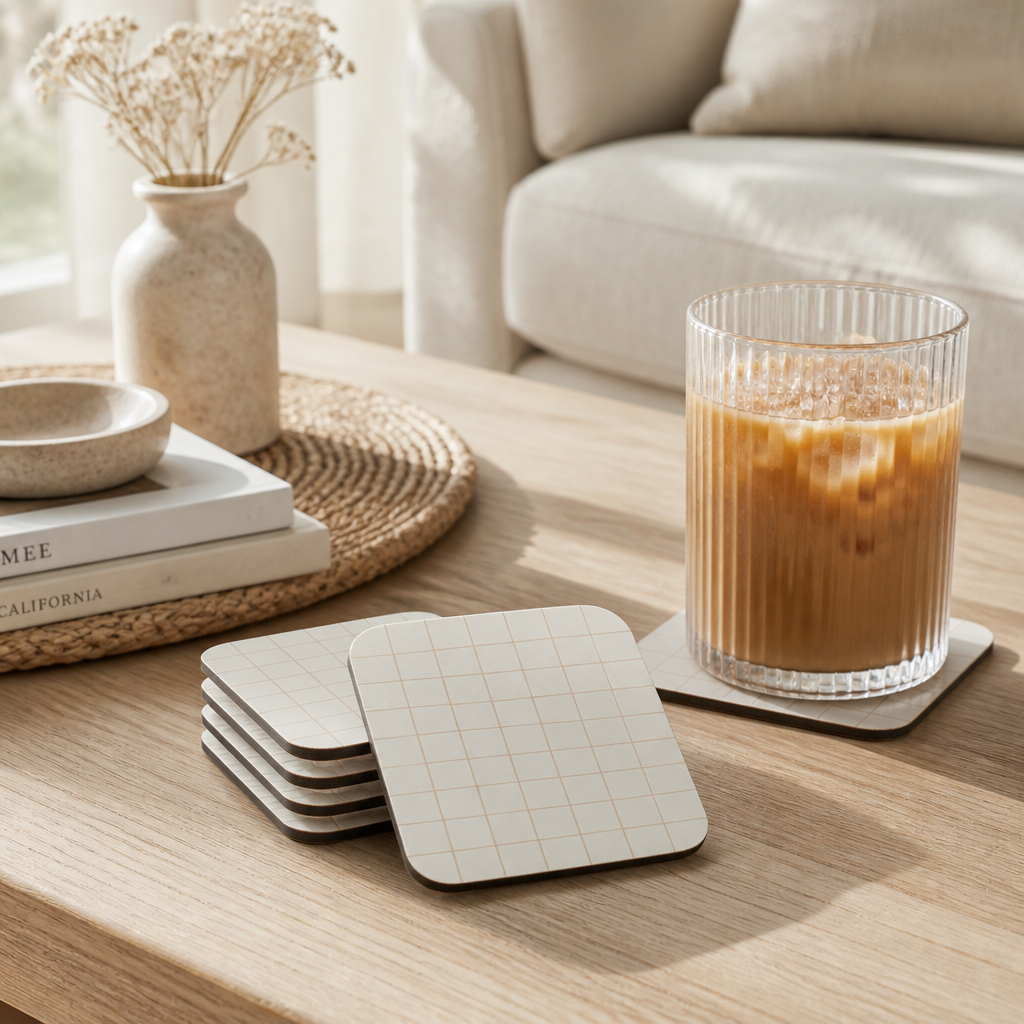
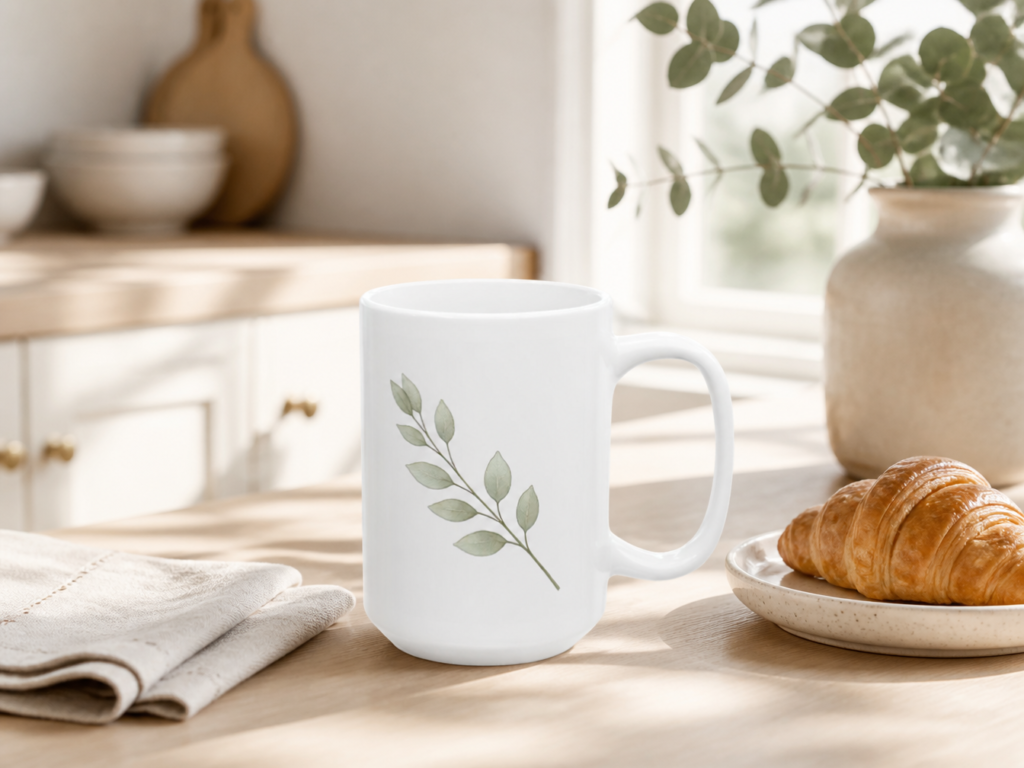
The final layer is often the one people forget entirely: accessories. A mug left on the coffee table, a coaster set out and ready to use — these small, everyday objects are what make a space feel lived-in rather than staged.
The key principle here is that accessories should echo your textiles, not repeat them exactly. The botanical leaf sprig on the mug and coaster picks up the same color story and design language as the Willow Garden pillow, but at a smaller, quieter scale. It’s a subtle nod rather than a matching set — and that restraint is exactly what keeps a room from feeling like a themed display instead of a real home.
Bringing It All Together
Designing a beautifully layered sofa isn’t about buying more — it’s about buying with a plan. Start with one hero pattern, add a coordinating pattern for structure, and round it out with a quiet neutral for balance. Repeat your colors instead of your prints, layer in a variety of shapes and sizes, and finish the space with small accessories that echo the same story.
That’s the entire formula. No expensive furniture required — just a thoughtful mix of textiles, chosen with intention.