Let me paint you a picture. It’s a Tuesday morning, you’re already running late, and you glance over at the sad, wilted fiddle leaf fig in the corner of your living room — the one you swore you’d take better care of this time. There’s a trail of dry leaves on your freshly vacuumed rug, and someone (probably the four-year-old) has been using the pot as a dump site for Lego bricks.
Sound familiar?
I have killed more houseplants than I care to admit. Succulents, supposedly the most unkillable things on earth? Murdered. A pothos — a pothos, people — gone in three weeks. Between the chaos of kids, a dog, travel, and a schedule that doesn’t slow down, real plants and I just weren’t meant to be together.
And then I discovered the world of high-quality faux plants, and honestly? My home has never looked better.
But here’s the thing — there’s a real art to pulling this off. Done right, faux greenery looks lush, intentional, and totally Instagram-worthy. Done wrong, it looks like a dusty plastic prop from a 1997 waiting room. I’m going to walk you through everything I’ve learned so you can get the “lush, effortless, green home” aesthetic without the guilt of a graveyard of dead plants.
This post contains affiliate links. As an Amazon Associate, I earn from qualifying purchases at no extra cost to you. I only recommend products I genuinely love and would use in my own home!
Why Faux Plants Are Actually a Smart Home Decor Choice
Can we just drop the faux plant shame for a second? Because I think a lot of us have been conditioned to feel like real plants are the only “valid” option for a well-decorated home. But here’s the reality for most busy moms: real plants are a part-time job.
Faux plants, when chosen well, offer benefits that real ones genuinely can’t match:
- Zero maintenance. No watering, no fertilizing, no figuring out why the leaves are turning yellow again.
- Pet and kid safe. Many popular houseplants — pothos, philodendrons, peace lilies — are actually toxic to pets and children. Faux greenery eliminates that risk entirely.
- Consistent beauty. They look the same in January as they do in July. No seasonal die-off, no sad winter drooping.
- Placement freedom. Dark bathroom with no natural light? A faux fern doesn’t care. You can put greenery anywhere you want it.
- Allergy-friendly. If you or anyone in your family has plant allergies or sensitivities to soil mold, faux is the obvious win.
The key isn’t choosing between real and fake — it’s choosing quality faux and styling it with intention.
How to Choose Faux Plants That Actually Look Real
This is where most people go wrong. Not all faux plants are created equal, and the difference between “gorgeous” and “gas station gift shop” comes down to a few specific things you should look for.
Look for Realistic Texture and Imperfection
The best faux plants have slight variations in leaf color, realistic veining, and a mix of mature and “new growth” leaves. Real plants aren’t perfectly uniform — and neither should your faux ones be. Stay away from anything where every single leaf is an identical, shiny, bright green. That’s the giveaway.


Choose the Right Material
- Silk plants tend to look softer and more natural up close — great for smaller pieces like desk plants or bathroom accents.
- Plastic or PE (polyethylene) plants are more durable and better for larger statement pieces that will live on the floor. High-quality PE trees can genuinely fool people.
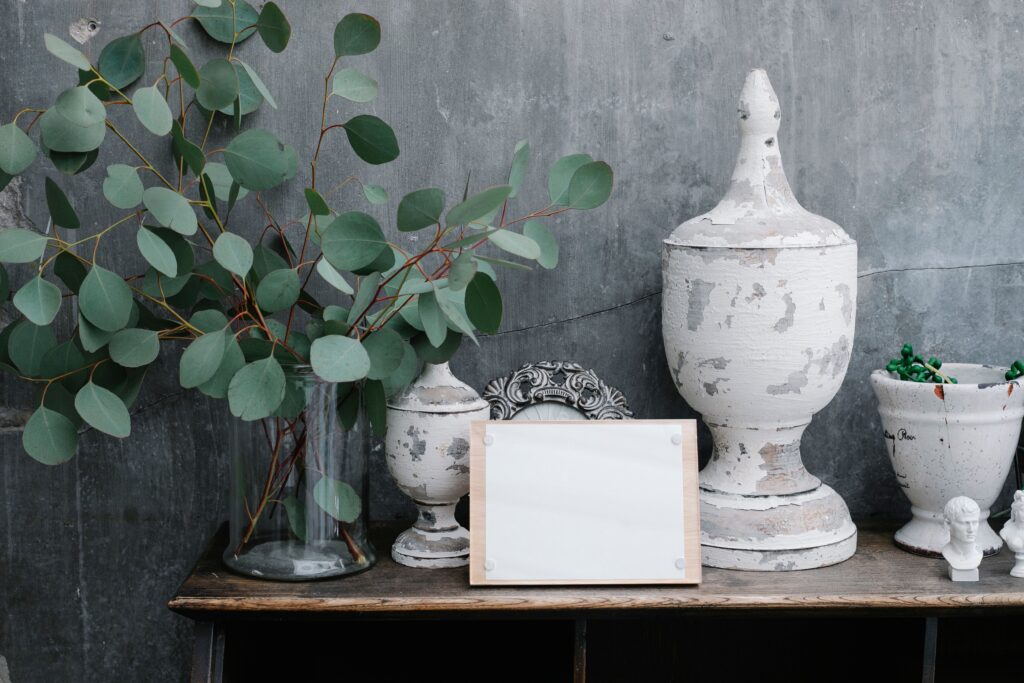
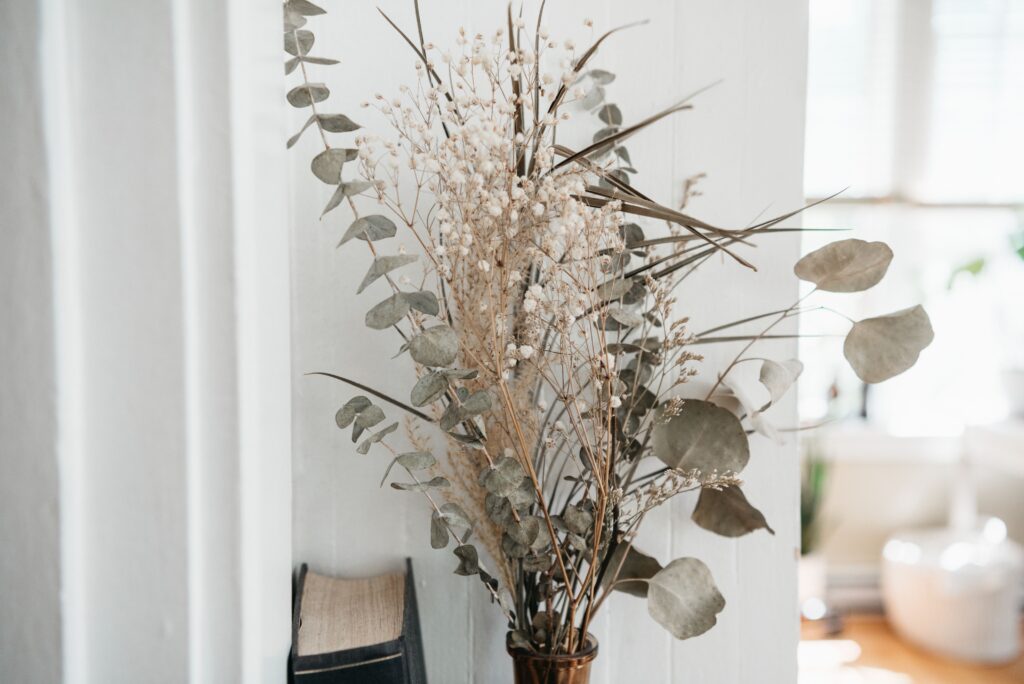
- Dried/preserved plants are technically real but require zero care. Pampas grass, dried eucalyptus, and bunny tail grasses are huge right now and look stunning in vases.
Size Up More Than You Think
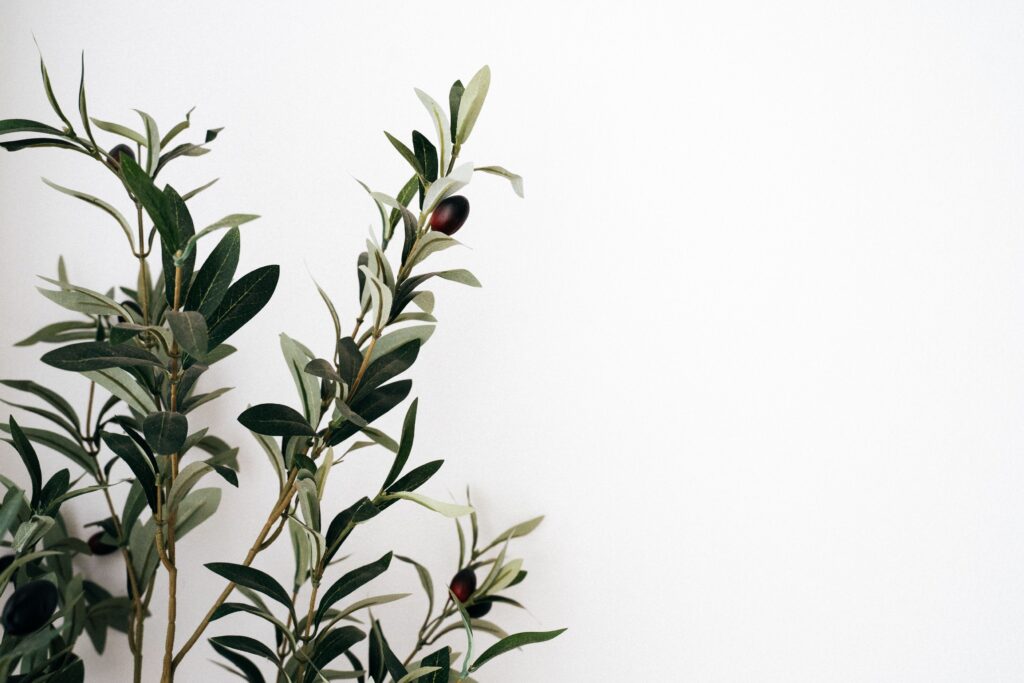
One of the most common faux plant mistakes is going too small. A tiny faux plant on a large empty shelf looks sad and fake. Go bigger than feels comfortable — a tall faux olive tree, a full trailing pothos, a wide monstera. Fullness reads as real. Sparse reads as plastic.
The Best Spots in Your Home for Faux Greenery
Placement is everything. Strategic placement can make your faux plants look so natural that guests will ask you how you keep them alive.
Living Room: Go Big and Layered
Your living room is the perfect place for a statement faux tree. A 5–6 foot faux olive tree, eucalyptus, or fiddle leaf fig in a beautiful planter instantly anchors a corner and adds that organic warmth that every well-styled living room needs.
Layer it up: pair your tall tree with a medium-height plant on a side table and a small trailing plant on a shelf or ledge nearby. This creates depth and looks like you have a legit plant collection going.


Kitchen and Dining: Fresh Herbs Aesthetic
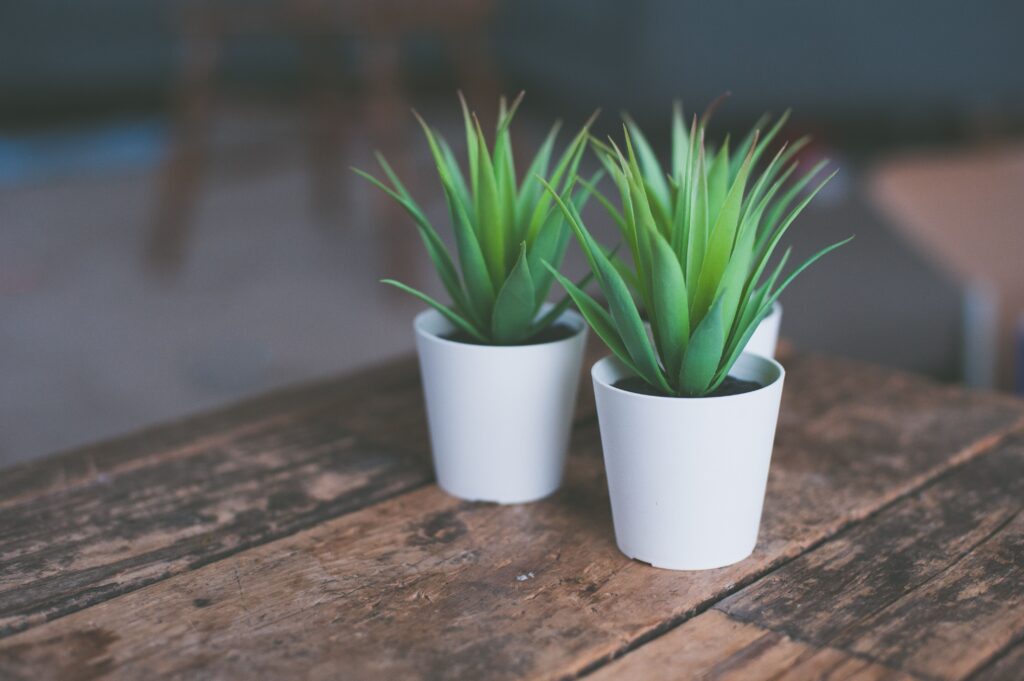
The kitchen is tricky for real plants because of temperature changes, steam, and general cooking chaos. But a cluster of faux herb plants in small terracotta pots on a windowsill? Adorable, functional-looking, and absolutely zero effort.
You can also do a trailing pothos or ivy along the top of your kitchen cabinets for that collected, lived-in vibe.

Bathrooms: The Dark Room Solution
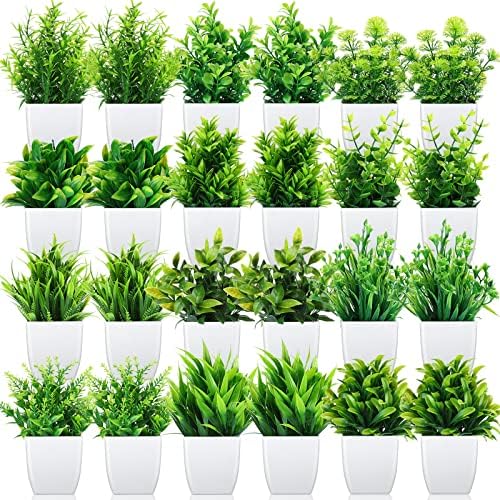
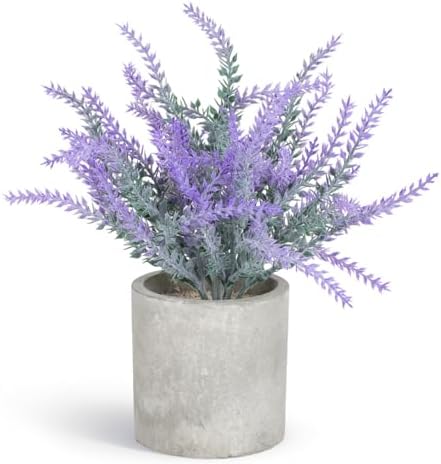
Most bathrooms don’t have the natural light real plants need to thrive. But a faux fiddle leaf, fern, or trailing ivy in a bathroom can make the space feel like a spa retreat. Hang a small macrame plant hanger with a faux trailing string of pearls near the mirror, or set a chunky faux monstera in the corner next to your bathtub.
This is genuinely one of the biggest wins faux plants offer — beautiful greenery in spaces where real plants would just slowly die.
Kid’s Rooms and Playrooms
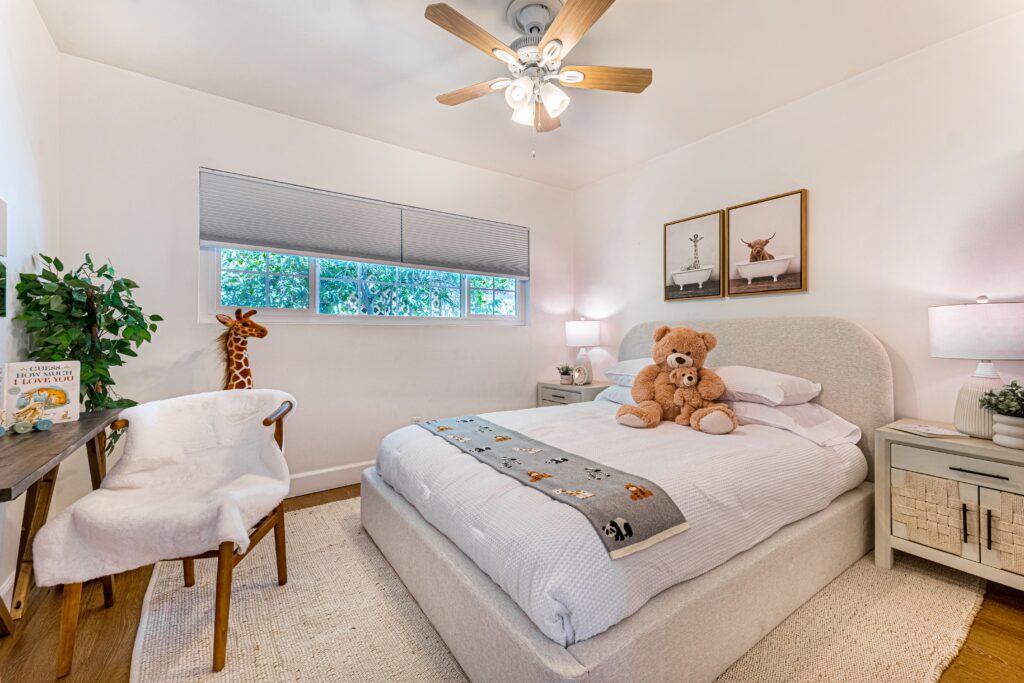
I cannot tell you how many real plants I’ve had destroyed by curious little hands. Faux plants in kids’ spaces are a complete no-brainer. A bright, cheerful faux cactus collection on a shelf, a fluffy faux cloud-shaped plant arrangement, or a cute faux succulent garden on a dresser — all of it adds life to the room without the mess or safety worry.
Styling Tips to Make Faux Plants Look Expensive and Real
Getting a quality plant is step one. Styling it well is step two — and this is where you can really elevate the whole look.
Use Elevated, Beautiful Planters
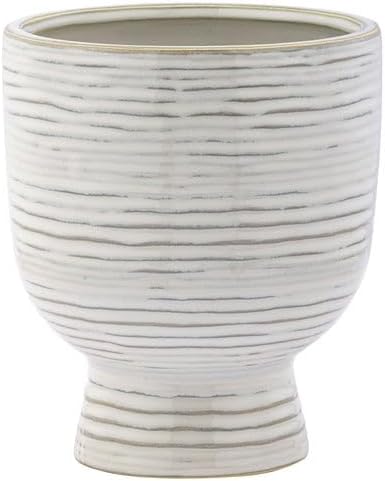
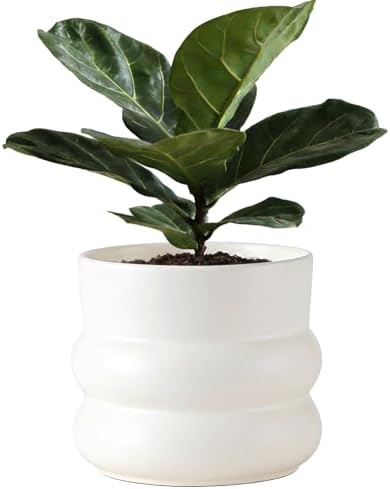
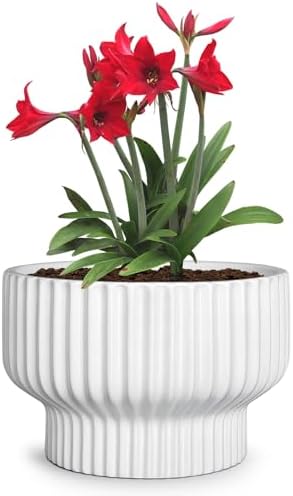
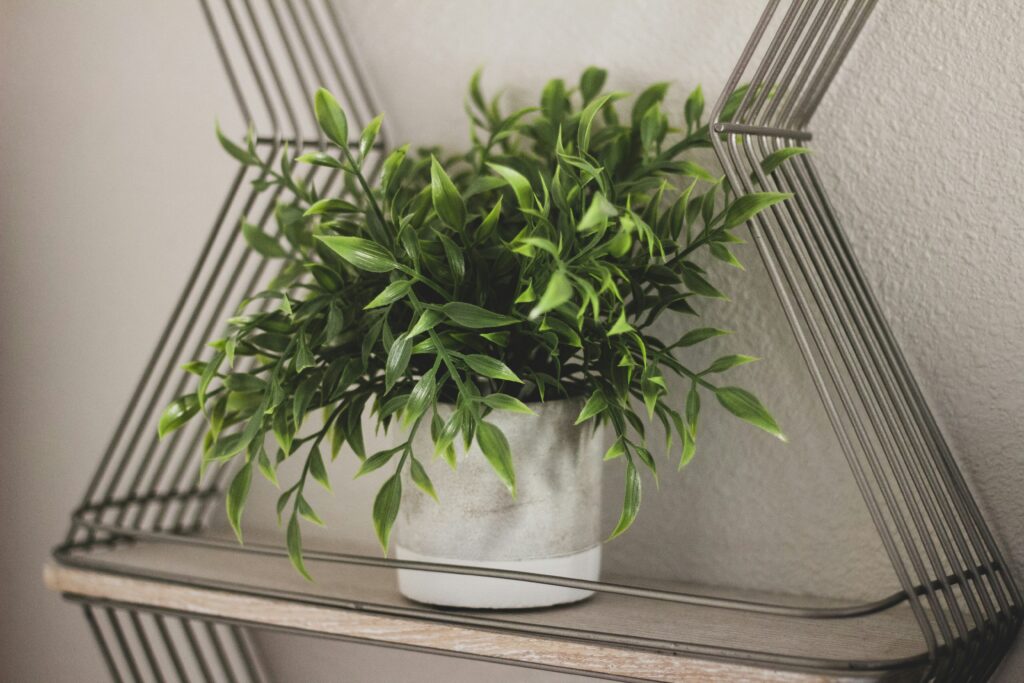
The pot or basket you choose does at least 50% of the visual work. A high-quality faux plant in a beautiful concrete, ceramic, or woven planter looks chic and intentional. The same plant in a flimsy plastic grow pot? Obvious and cheap.
Some of my favorite planter styles right now:
- Ribbed white ceramic pots (the minimalist classic)
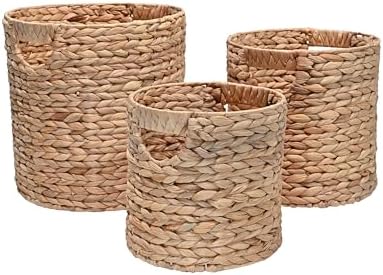
- Woven seagrass and jute baskets for a boho, warm feel
- Terracotta for something earthy and classic
- Matte black geometric planters for a modern edge
Add Filler and Texture Around the Base
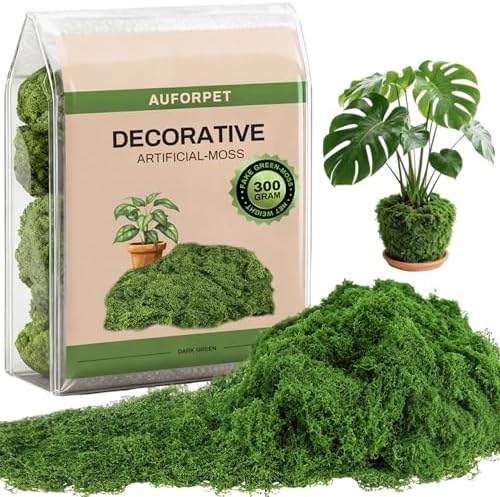
Real plants have soil, moss, rocks, or mulch at their base. Faux plants usually have visible foam or a plastic base — dead giveaway. Cover it with preserved moss sheets, decorative river rocks, or Spanish moss to finish the look. This single step makes an enormous difference.


Group Plants Together
Grouping three plants of varying heights in the same general area creates a curated, collected look — like you actually have a “plant corner.” It makes the space feel lived-in and styled rather than “I just stuck a fake plant here.”
Mix Faux with Real Dried Botanicals
I love mixing my faux plants with real dried elements — a bundle of dried pampas grass, a vase of dried cotton stems, a spray of dried lunaria. It adds organic texture and variety, and the mix makes everything feel more authentic overall.
How to Keep Your Faux Plants Looking Fresh Long-Term
Yes, faux plants still need a little TLC. Neglect them and they will start to look dusty and dull — which is the fastest way to make them look fake and sad.
Dusting: Use a soft microfiber cloth or a can of compressed air to dust leaves every few weeks. Dusty leaves are the #1 faux plant tell.
Spot Cleaning: For a deeper clean, gently wipe leaves with a barely damp cloth. For silk plants, some people swear by a very gentle spray of diluted fabric softener to restore the soft sheen.
Reshaping: Faux plants get squished in shipping and storage. Spend a few minutes when you first unbox them bending stems, fluffing leaves, and shaping branches so they look full and natural rather than flat.
Sunlight Fading: Keep faux plants out of direct, harsh sunlight — prolonged UV exposure can fade them over time. This is especially true for brightly colored or variegated leaf fakes.
Frequently Asked Questions About Decorating with Faux Plants
Q: Can faux plants really look real, or will people always know? Absolutely — high-quality faux plants fool people all the time. The keys are choosing realistic materials (look for PE or high-quality silk), using beautiful planters, adding moss or stones to the base, and keeping them dust-free. When styled with intention, most guests genuinely cannot tell the difference, especially from a few feet away.
Q: Where is the best place to buy quality faux plants? Amazon has a huge range of quality faux plants — brands like Nearly Natural, Pottery Barn, and West Elm also carry excellent options. For budget-friendly but convincing choices, IKEA’s FEJKA line is a perennial favorite. Always check product photos closely and read reviews that specifically mention how realistic they look in person.
Q: Are faux plants safe around kids and pets? Yes — this is actually one of the biggest advantages of faux plants! Many popular real houseplants (pothos, peace lilies, philodendrons, snake plants) are toxic to cats, dogs, and young children if ingested. Faux plants carry none of that risk. Just use common sense with very young toddlers who might chew on leaves.
Q: How do I make faux plants look less “fake” in photos? Styling is everything. Use beautiful planters, add organic filler at the base (moss, rocks, soil), and group them with other elements like candles, books, or decorative objects so the plant is part of a larger, intentional vignette. Good lighting — especially natural light — also makes a huge difference in how realistic they photograph.
You Really Can Have a Beautiful, Green Home — Without the Stress
Here’s what I want you to take away from all of this: there is no guilt allowed in decorating your home in a way that actually works for your life. If real plants bring you joy and you have the bandwidth for them, amazing. But if you’re like me — busy, distracted, already juggling a thousand things — faux plants done well are a legitimate, beautiful choice.
My home feels warmer, greener, and more alive than it ever did when I was dragging home real plants every few months just to watch them slowly give up on me. With a little investment in quality and a little attention to styling, you can create a home that looks lush and intentional all year long.